
-
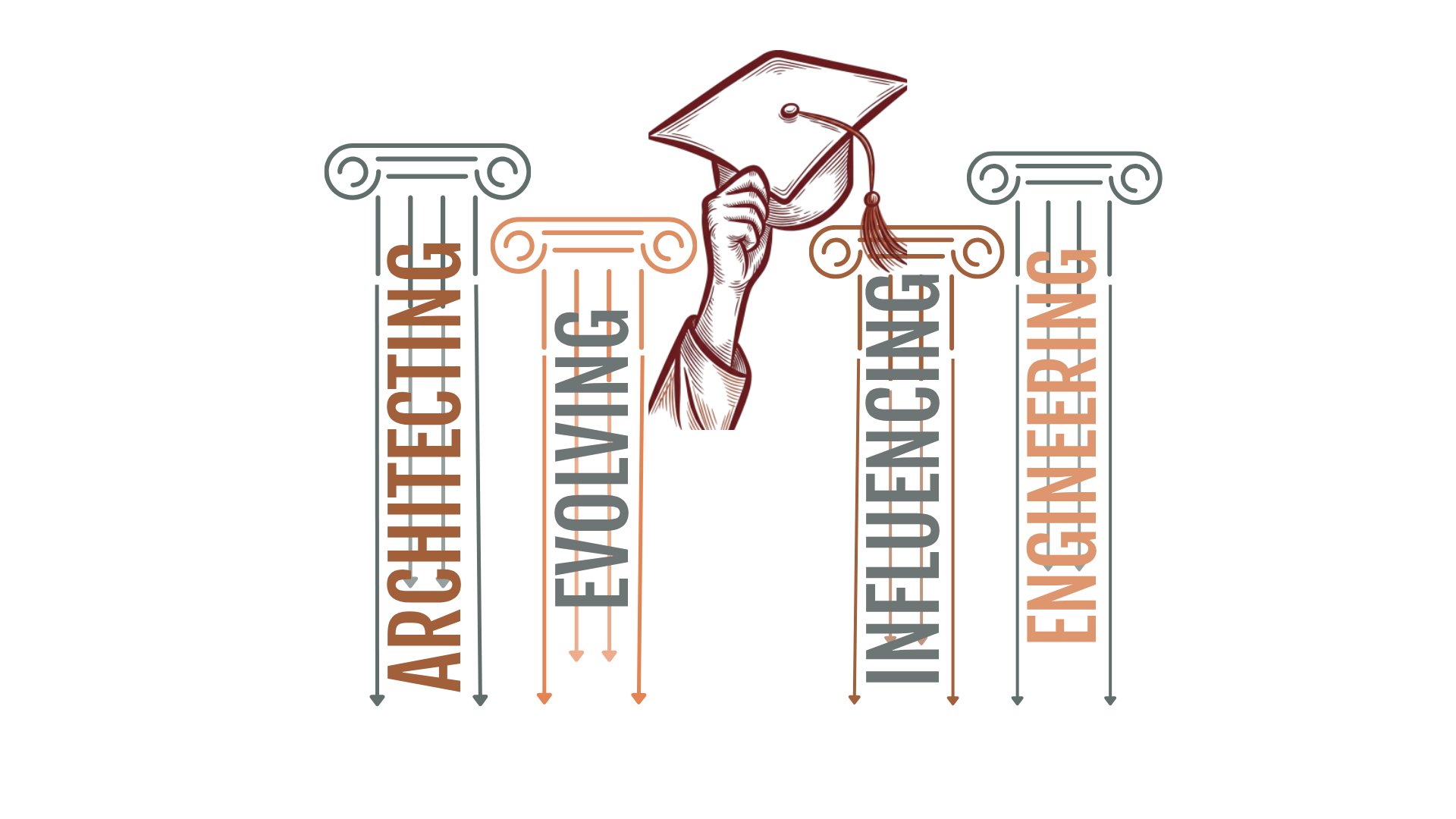
Linked to: "Navigate complexity" — Our graduates are masters of Architecting; they possess the cognitive agility to navigate complexity. They do not fear ambiguity; they frame it.
The Identity Connection: We build Scientific Sense-Making by treating ambiguity as a data set. Our graduates are masters of framing ill-defined problems.
The Outcome: They distinguish signal from noise, evaluate AI outputs with critical rigor, and synthesize data to define the core of any problem. They enter any room or digital environment not as passive consumers, but as designers ready to build.
-
Linked to: "Think critically, embrace innovation, and use AI ethically" — Our graduates are masters of Evolving; they understand that in a rapidly shifting technological landscape, the ability to "unlearn" outdated paradigms is the ultimate competency.
The Identity Connection: We nurture Fascination by treating "unlearning" as a scientific necessity. A scientist knows that theories are only as good as the next experiment.
The Outcome: They approach every innovation through a lens of ethical responsibility, ensuring that their solutions advance equity rather than reinforce bias. They operate with an iterative mindset, treating every challenge as a prototype for growth.
Our Graduate Profile
-
Linked to: "Shape an AI-empowered world with confidence" — Our graduates are masters of Engineering; they turn ideas into working solutions. An architect who cannot build is only a critic. Our graduates build.
The Identity Connection: We forge Competency Beliefs by requiring students to ship real, tested artifacts. Nothing confirms that a student belongs in the scientific and innovative community like building something that works.
The Outcome: They convert analysis into functional, deployed solutions. They do not wait for a finished tool or for permission; they build it themselves. They orchestrate whatever technology the moment demands, today's stack and the one that replaces it, managing a build from prototype to delivery. In a world that trains everyone
-
Linked to: "Solve real-world problems and advance equity" — Our graduates are masters of Influencing; they realize that the best idea in the world is worthless without the ability to move others to act.
The Identity Connection: We deepen Valuing Science by connecting scientific work to social and community purpose. True Science Identity is confirmed when a student realizes their scientific mind can serve their community.
The Outcome: They drive alignment through strategic communication, choosing the right visual, oral, or written medium to convey data-driven narratives. They lead through collaborative action, ensuring that their solutions to real-world problems are grounded in collective intelligence and accountability. Crucially, they recognize that sustainable impact requires human-centered architecture; they proactively cultivate psychological safety within teams and utilize active empathy to navigate conflict restoratively, repairing community foundations whenever they fracture.
A note on Capacity vs. Tools
Engineering is a durable capacity, not a fixed toolset. We name the capacity, turning ideas into working and tested solutions, in the graduate profile because that ability outlasts any single technology. The specific tools, platforms, and credentials that prove it live in our assessment rubric below, which the board and staff revisit every two years to track workforce shifts. This keeps our graduate identity stable while our tooling stays current. As of 2026, the technical proficiencies that operationalize the Engineering pillar are detailed here.
The engineering rubric: Hard Tool Fluency.
Pillar Focus: The mastery of verified digital, algorithmic, and data-driven tools required to build, test, and automate solutions within an AI-driven economic landscape.
E.1 Generative AI & Agentic Prompting
Performance Indicators (What Teachers Grade): Student constructs, refines, and sequences advanced prompts to co-author code, analyze text, or generate functional models. • Student audits AI outputs for hallucinations, technical errors, and algorithmic logic flaws.
Aligned Workforce Skill & Citation: AI & Big Data / Technological Literacy: Ranked among the fastest-growing core skills by global employers. • Orchestration & Human Agency: As AI tools automate task execution, the human value shifts entirely to directing and reviewing agentic workflows.
Direct Credly Badge Mapping: Google AI Essentials (Google) · Artificial Intelligence Fundamentals (IBM)
E.2 Applied Data Engineering & Analytics
Performance Indicators: Student captures, cleans, structures, and transforms raw datasets using programmatic tools (e.g., Python or advanced sheets). • Student builds interactive dashboards and data models to visualize trends.
Aligned Workforce Skill & Citation: Data Engineering & Analysis: A critical, high-demand technical skill layer underpinning successful digital transition and AI integration.
Direct Credly Badge Mapping: Data Analysis & Visualization Foundations (IBM / Coursera) · CompTIA Data+ (CompTIA)
E.3 Systems Prototyping & Cloud Mechanics
Performance Indicators: Student utilizes digital fabrication tools, CAD, or cloud-based environment architectures to deploy functional prototypes. • Student manages version control and documents the development lifecycle of a technical build.
Aligned Workforce Skill & Citation: Cloud Computing & Networks: Consistently among the top technical requirements for early-career pathways in technology and operations.
Direct Credly Badge Mapping: AWS Certified Cloud Practitioner (Amazon Web Services) · Enterprise Design Thinking Practitioner (IBM)