
Meet Stoca’s Founding Executive Director - Kryszelda Gorrell
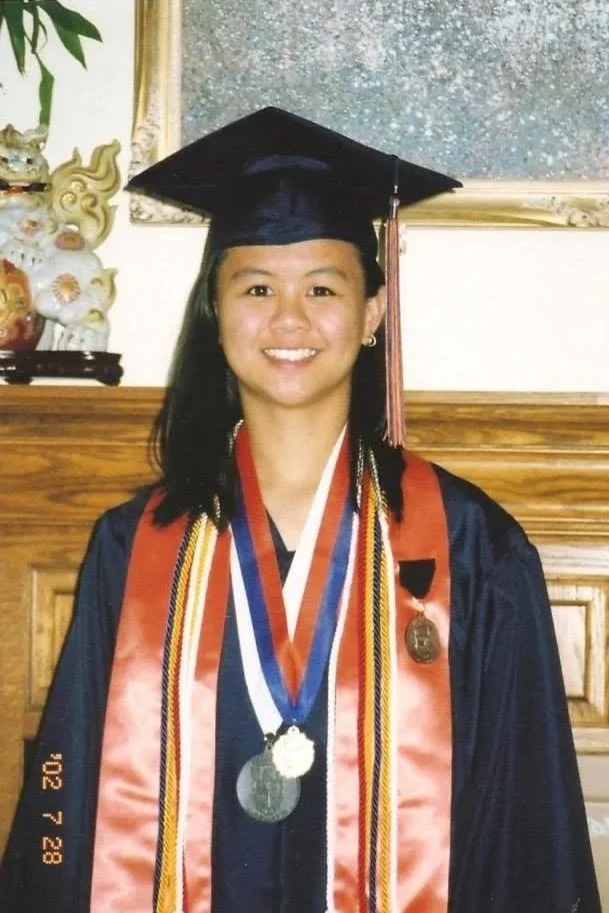
I am the daughter of undocumented parents. My father was deported twice, and their deportations dictated the shape of my childhood. In a house like mine, education was not about finding yourself. It was the way out, and I knew it early.
So I figured out school. I scrutinized every rubric on every project. I crammed every word onto every cheat sheet. I practiced every kind of math problem until I could do all of them. I graduated with a 4.018 and an IB Diploma, and I was proud of it. What I did not understand yet was that I had gotten very good at performing school without ever learning the thing school was supposed to build.
I did school perfectly. I never learned how to think.
None of it meant much to me until my first physics class, when I found a language that actually explained how the world worked. I was hooked enough to change my whole plan. But I studied physics the way I studied everything else, procedurally, one memorized problem type at a time. It got me a near full ride to USC. And there, for the first time in my life, I hit a wall. Not because the physics was too hard, but because the moment the procedure stopped working, I had nothing underneath it. My advisor's answer was to tell me to switch to something easier.
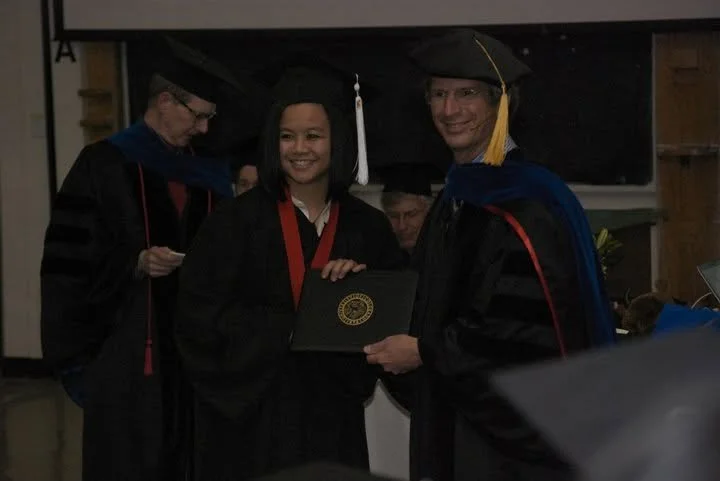
Four years later, and a thousand miles away, it happened again. I had transferred to CU Boulder, graduated magna cum laude, and done an honors thesis in theoretical physics, work that almost no undergraduate gets to touch. Two weeks before graduation, my thesis advisor told me I was not smart enough for graduate school and refused to write my recommendation. Two different people. Two different institutions. The same move.
They found a deficit and stopped looking.
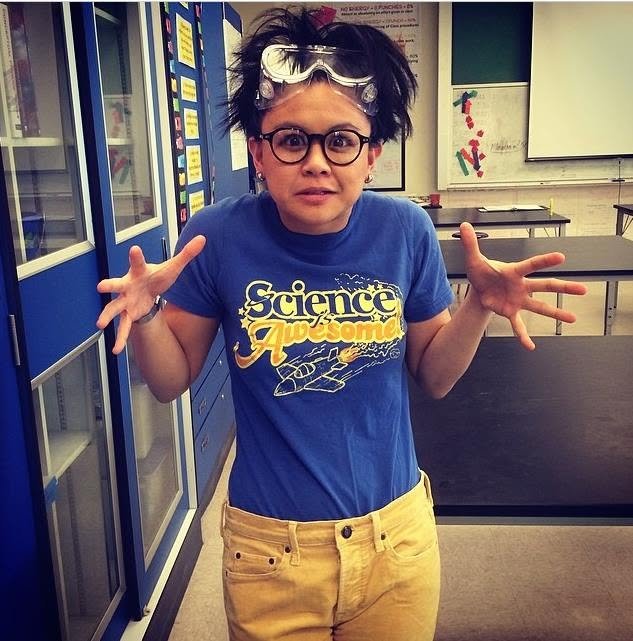
I became a statistic. But I did not leave physics because the math beat me. I left because I had spent my whole life using education to change my story, and I ran into a system that misread my success and wrote me off for it. I did not fully understand what had happened to me until I was standing in my own first classroom, teaching high school physics in Chicago, looking at juniors and seniors who read at a first-grade level and believed there were no numbers between zero and one. I had learned to game school. My students could not even get in the door. And gaming it would not have saved them anyway.
That is the moment everything turned over. My whole life had been preparing me to teach, and the job was not to make kids better at checking boxes. It was to teach them to think.
Then there was C. She was in our founding class, and one of the strongest debaters I ever coached. She made it to the state tournament at Northwestern University in Evanston, and she turned to me and said, Ms. Mendoza, I feel like I'm in New York City.
Twenty miles from home, and she had never left the city.
So I raised the money to send her to debate camp at the University of Michigan, and I drove her there and back myself, because her family couldn't. She flourished. She loved it. And she was still the only student in our founding
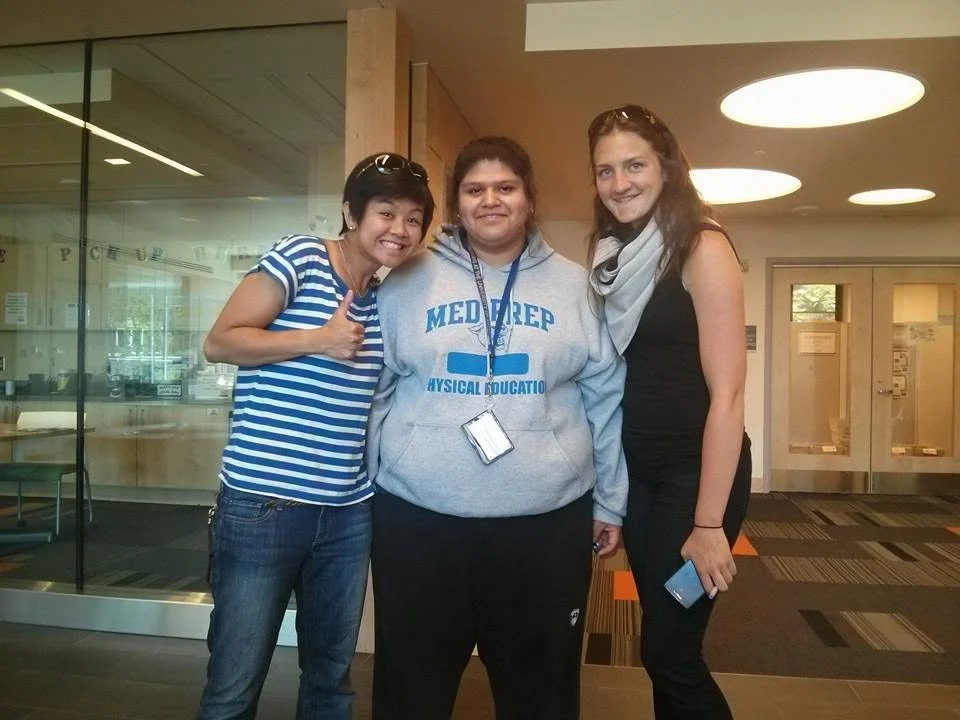
That is why I went into leadership, and it is where I learned the part of this work I did not have yet. I had always carried strong ideas and a big vision, and no idea how to get anyone to carry them with me. At DSST in Denver, I started as an instructional coach and took the slow route on purpose. I learned to build trust one person at a time, to give feedback people could actually use, to sit in the hard conversation instead of around it. Then I learned to do all of it at scale. By the time I opened Aurora Science and Tech as founding principal, I could hold the vision and build the team at once, in a first year when both have to happen together. Our Black students hit the 94th percentile in the state for math growth. AST became the highest-performing secondary school in the district. The problem was never the students' capability. It was what the system chose to measure, and who it chose to believe.
I have an eighteen-month-old daughter now, named Ayla. I know exactly what I ran into. I know exactly what C ran into. I have no idea what Ayla will run into, and neither does anyone else. That is the real design problem. I can't build her a school that prepares her for one specific obstacle. I can build one that teaches her to pivot when she hits it, which is the one thing my own education never gave me.
Stoca Academy is that school.
She Didn’t need a better teacher, she needed a better school.
class who did not graduate on time. I found out later she had spent her senior year avoiding me, because she was afraid of disappointing me. Everything I had given her depended on me deciding, personally, to give it. So it broke twice. It broke when I left for Colorado, and it broke before that, the moment my care became one more thing she felt she was failing.
C did not need a better teacher. She had one. She needed a better school, and a school is not something you fix one classroom at a time.
The school I needed, and didn't have.